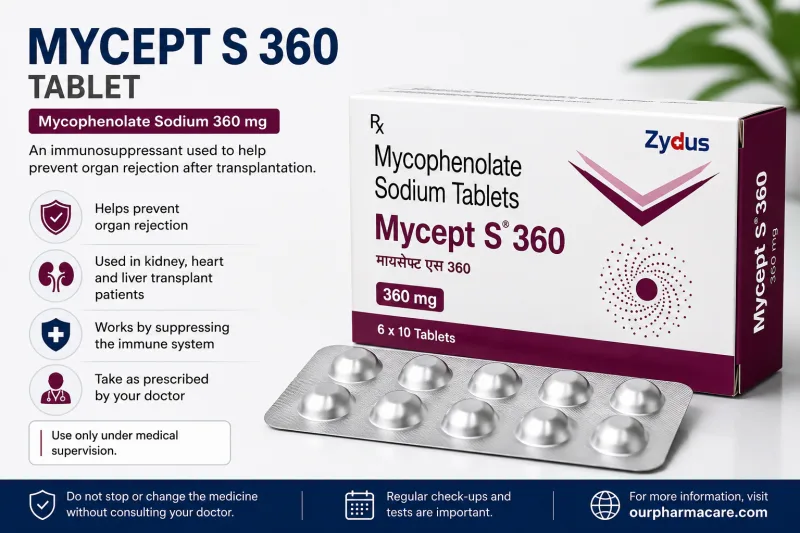
Organ transplantation can significantly improve the quality of life for patients with end-stage organ disease. However, after a transplant, the body's immune system naturally recognizes the new organ as foreign and may attempt to reject it. To help prevent this immune response, doctors prescribe immunosuppressant medicines such as Mycept S 360 Tablet.
Mycept S 360 Tablet contains Mycophenolate Sodium 360 mg, an immunosuppressive medicine commonly used after kidney transplantation and, in some cases, after other organ transplants. It works by reducing the activity of the immune system, helping protect the transplanted organ from rejection. Because it affects the immune system, this medicine should only be taken under the supervision of a qualified healthcare professional.
In this comprehensive guide, you'll learn everything about Mycept S 360 Tablet, including its uses, how it works, dosage instructions, benefits, side effects, precautions, storage information, and frequently asked questions.
If you're looking to purchase or learn more about this medicine, you can also visit our product page: Mycept S 360 Tablet.
What Is Mycept S 360 Tablet?
Mycept S 360 Tablet is a prescription medicine that belongs to the class of medicines known as immunosuppressants. It contains Mycophenolate Sodium 360 mg as its active ingredient and is primarily prescribed to reduce the risk of organ rejection following transplantation.
After receiving a transplanted kidney or another organ, the body's immune system attempts to attack the transplanted tissue because it identifies it as foreign. Mycept S 360 Tablet helps reduce this immune response, allowing the transplanted organ to function properly.
This medicine is generally prescribed together with other immunosuppressive medicines such as tacrolimus and corticosteroids to provide effective long-term transplant protection.
Because Mycept S 360 Tablet suppresses immune function, patients should attend regular follow-up appointments and blood tests throughout treatment.
Uses of Mycept S 360 Tablet
Mycept S 360 Tablet is mainly prescribed for preventing rejection of transplanted organs. Depending on the patient's medical condition, doctors may recommend it as part of a long-term immunosuppressive treatment plan.
- Prevention of kidney transplant rejection
- Supportive therapy after organ transplantation
- Long-term immunosuppressive treatment
- Used in combination with other anti-rejection medicines
- Helps maintain healthy transplanted organ function
The medicine should only be used for the condition for which it has been prescribed. Never share this medicine with another person or use it without medical supervision.
How Does Mycept S 360 Tablet Work?
Mycept S 360 Tablet contains Mycophenolate Sodium, which reduces the activity of certain white blood cells responsible for attacking transplanted organs.
It works by blocking an enzyme that immune cells require to multiply. As a result, the immune system becomes less likely to recognize and attack the transplanted organ, reducing the chances of organ rejection.
Since this medicine lowers immune activity, patients may become more susceptible to infections. For this reason, doctors usually monitor treatment regularly through blood tests and clinical examinations.
Potential Benefits of Mycept S 360 Tablet
When taken exactly as prescribed, Mycept S 360 Tablet offers several important benefits for transplant recipients.
- Helps prevent organ rejection after transplantation
- Supports long-term transplant success
- Protects transplanted kidney function
- Reduces immune system attack on transplanted organs
- Works effectively with other immunosuppressive medicines
- Improves long-term transplant outcomes when used correctly
Regular follow-up visits and adherence to your prescribed treatment plan are essential to achieve the maximum benefit from Mycept S 360 Tablet.
How to Take Mycept S 360 Tablet
Always take Mycept S 360 Tablet exactly as prescribed by your transplant specialist or healthcare professional. The dosage depends on your medical condition, type of organ transplant, and response to treatment.
- Swallow the tablet whole with a glass of water.
- Do not crush, chew, or break the tablet.
- Take it at the same time every day.
- It may be taken on an empty stomach or as advised by your doctor.
- Continue taking the medicine even if you feel well unless your doctor instructs you to stop.
Never change the dose or discontinue treatment on your own, as this may increase the risk of transplant rejection.
How Often Should Mycept S 360 Tablet Be Taken?
The frequency of Mycept S 360 Tablet depends entirely on your doctor's prescription. Most transplant patients are advised to take the medicine regularly as part of their long-term immunosuppressive therapy.
Take every dose exactly on schedule. Missing doses or taking the medicine irregularly may reduce its effectiveness and increase the risk of organ rejection.
Common Side Effects of Mycept S 360 Tablet
Like all medicines, Mycept S 360 Tablet may cause side effects, although not everyone experiences them. Many side effects are mild and improve as your body adjusts to treatment.
Possible side effects include:
- Nausea
- Vomiting
- Diarrhoea
- Stomach pain
- Headache
- High blood pressure
- Low white blood cell count
- Increased risk of infections
Seek immediate medical attention if you develop fever, persistent sore throat, unusual bleeding, severe diarrhoea, difficulty breathing, or signs of an allergic reaction.
Important Precautions Before Using Mycept S 360 Tablet
Before starting treatment, inform your doctor about your complete medical history and all medicines you are taking.
- Use only under specialist medical supervision.
- Regular blood tests may be required during treatment.
- Avoid close contact with people who have contagious infections.
- Inform your doctor if you have liver or kidney disease.
- Tell your doctor if you are pregnant, planning pregnancy, or breastfeeding.
- Do not receive live vaccines without medical advice.
- Avoid excessive exposure to sunlight and use appropriate sun protection.
Because this medicine suppresses the immune system, maintaining good hygiene and attending all follow-up appointments are important throughout treatment.
Drug Interactions
Mycept S 360 Tablet may interact with certain medicines, supplements, or vaccines. Inform your doctor if you are taking:
- Tacrolimus
- Cyclosporine
- Azathioprine
- Antacids containing magnesium or aluminium
- Cholestyramine
- Live vaccines
- Other immunosuppressant medicines
Always provide your doctor with a complete list of prescription medicines, over-the-counter products, herbal supplements, and vitamins before starting treatment.
Storage Information
Store Mycept S 360 Tablet below 30°C in a cool, dry place away from direct sunlight and moisture. Keep the tablets in their original packaging until use and keep them out of the reach of children and pets.
- Store below 30°C.
- Protect from moisture and direct sunlight.
- Keep the medicine in its original blister pack.
- Do not use after the expiry date.
- Dispose of unused or expired medicine safely as advised by your pharmacist.
What to Do If You Miss a Dose?
If you miss a dose of Mycept S 360 Tablet, take it as soon as you remember. If it is almost time for your next scheduled dose, skip the missed dose and continue with your regular dosing schedule.
Do not take two doses at the same time to make up for a missed dose, as this may increase the risk of side effects.
When Should You Contact Your Doctor?
Seek immediate medical advice if you experience any unusual symptoms while taking Mycept S 360 Tablet, especially because it suppresses the immune system.
- Persistent fever or chills
- Difficulty breathing
- Severe diarrhoea or vomiting
- Unusual bruising or bleeding
- Signs of infection
- Severe allergic reaction
- Sudden swelling of the face or throat
Regular follow-up visits and laboratory tests are essential to monitor your response to treatment and reduce the risk of complications.
Frequently Asked Questions
1. What is Mycept S 360 Tablet used for?
It is used to help prevent organ rejection after kidney and other organ transplants.
2. Can I stop taking Mycept S 360 Tablet if I feel well?
No. Do not stop taking the medicine unless your doctor advises you to do so.
3. Can this medicine increase the risk of infections?
Yes. Since it suppresses the immune system, it may increase your risk of infections.
4. Is Mycept S 360 Tablet safe during pregnancy?
Inform your doctor if you are pregnant, planning pregnancy, or breastfeeding before starting treatment.
5. Can I receive vaccines while taking this medicine?
Some vaccines, particularly live vaccines, may not be suitable. Always consult your doctor before vaccination.
Disclaimer
This article is intended for educational and informational purposes only. It should not be considered a substitute for professional medical advice, diagnosis, or treatment. Mycept S 360 Tablet is a prescription medicine and should only be used under the guidance of a qualified healthcare professional. Always follow your doctor's instructions regarding dosage, duration, and monitoring.