You've been tracking your cycle for months. You know your fertile window. You've downloaded the apps, changed your diet, cut back on alcohol, and started taking prenatal vitamins before you're even pregnant. And still — nothing.
If that sounds familiar, you're not alone, and more importantly, you're not doing anything wrong.
For a lot of women, the obstacle isn't effort. It's ovulation — or the lack of it.
What Actually Has to Happen for You to Get Pregnant
Here's the basic sequence most people know but don't really think about: your brain signals your ovaries, your ovaries release an egg, that egg gets fertilized, it implants, and a pregnancy begins.
But that chain has a lot of links. And one of the most common places it breaks is the very first step — the egg never actually gets released.
Ovulatory dysfunction is behind roughly 25% of all female infertility cases, according to the American Society for Reproductive Medicine. It's not rare. It's one of the most common reasons couples have trouble conceiving.
What's Actually Stopping It
The frustrating part about ovulation problems is that they can come from completely different directions — hormones, stress, a thyroid nobody thought to check, even how hard you've been working out. Here are the ones doctors see most often.
Polycystic Ovary Syndrome (PCOS)
This is the big one. PCOS affects somewhere between 6 and 12% of women in the US, and irregular or absent ovulation is one of its defining features. Plenty of women have it for years without knowing — especially if their periods are just "a little unpredictable" rather than completely absent. If your cycle has never been consistent, this is worth asking about specifically.
Thyroid Problems
Your thyroid doesn't get enough credit for how much it affects reproduction. Both an underactive and overactive thyroid can disrupt the hormonal signals that trigger ovulation. It's a quick blood test. A lot of women find out this is their issue only after they push for it.
High Prolactin
Prolactin is the hormone that drives milk production. When it's elevated in women who aren't breastfeeding, it can shut ovulation down. Certain medications cause this. Chronic stress can too. So can a small non-cancerous growth on the pituitary gland called a prolactinoma — which sounds alarming but is usually very manageable once it's identified.
Your Brain Going Quiet
The hypothalamus is the part of the brain that starts the whole chain reaction. Under enough stress, significant calorie restriction, or serious overtraining, it stops sending the signals. Ovulation doesn't happen because the body has essentially decided this isn't a safe time to get pregnant. It's a survival response. It's also reversible — but not by pushing harder.
Declining Egg Supply
Egg quantity and quality drop with age, and this can start affecting fertility earlier than most women expect — sometimes in the early 30s, not just at 40. An AMH blood test measures ovarian reserve and gives you a clearer picture of where things actually stand, rather than going off assumptions about your age.
What Doctors Actually Do About It
Here's the part most articles skip past too quickly.
Once a doctor figures out which piece isn't working, there are real, specific options — not just lifestyle advice. The approach depends entirely on the cause, but one tool that comes up frequently when the problem is ovulation specifically is a hormone trigger.
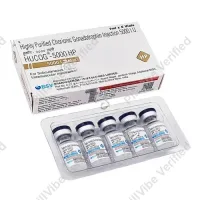
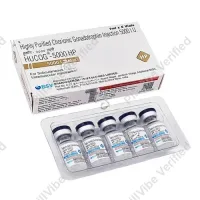
The body's natural ovulation signal is a surge of luteinizing hormone, LH. When that surge doesn't happen on its own — even when everything else is in place — a synthetic version of a similar hormone called HCG can step in and do the same job. It causes the follicle to release the egg, usually within 36 to 40 hours. Fertility specialists have used this approach for decades. It's not experimental. It's not a last resort. It's a standard part of ovulation induction protocols, and it gives couples a predictable window instead of another month of guessing.
This is one option among several. Some women need medication to grow the follicle in the first place. Some need thyroid treatment, or a medication to lower prolactin, or a change in how much they're exercising. The point is that the cause shapes the solution — which is exactly why getting diagnosed matters.
When to Stop Waiting It Out
Most ob-gyns use this as their guideline: if you're under 35 and have been trying for 12 months with no result, get evaluated. If you're 35 or older, that window drops to 6 months. Not because the situation is urgent in a scary way — but because waiting longer doesn't improve your odds, and actually knowing what's going on does.
A basic fertility workup isn't invasive or complicated. It usually covers:
- Blood work — FSH, LH, estradiol, prolactin, AMH, and thyroid levels
- A pelvic ultrasound — to look at the ovaries, check follicle count, and assess the uterus
- Cycle review — whether you're ovulating, how consistently, and whether the timing lines up
Most of this gets done in one or two appointments. A lot of it is covered by insurance. What you get at the end is an actual answer — which is worth more than another few months of uncertainty.
One More Thing
Ovulation problems aren't a dead end. Most women who get properly evaluated find a specific, treatable cause. That's the thing about this kind of infertility — once you know what's broken, the path forward is usually a lot clearer than the months of not knowing were.
The waiting and the wondering are the hardest part. The investigation is usually much more straightforward.
This article is for informational purposes only. Always consult a qualified healthcare provider before starting or changing any fertility treatment.