Shipping free on orders above $499 • All products sourced from licensed manufacturers

Need help? Call Us: +447767927719

Wishlist
My Cart 0
Shopping Cart (0)

Your cart is empty

Sub Total: $0.00

Spend More $499.00 to reach Free Shipping


Azee 500mg
24% OFF Rx Required

Azee 500mg In Stock

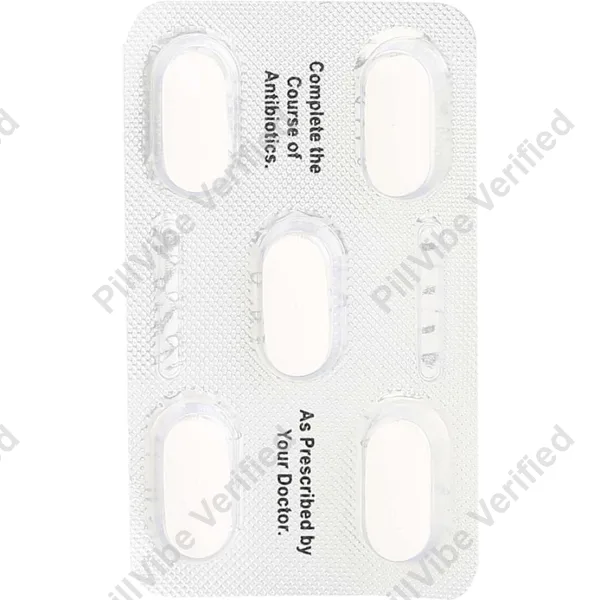
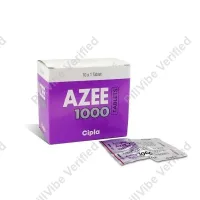
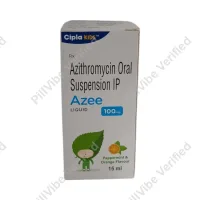
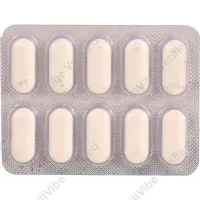
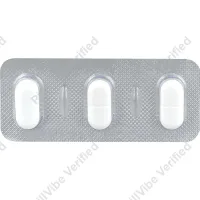
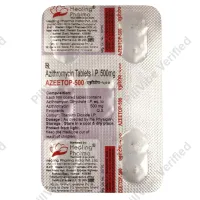
Azee 500 Mg contains Azithromycin, a broad-spectrum macrolide antibiotic. Short 3-day course provides 10 days of coverage. Once-daily dosing. Made by Cipla.

Pack Price Per Unit Qty
30 Tablets $32.00 $42.00 24% $1.07/unit
60 Tablets $59.00 $78.00 24% $0.98/unit
90 Tablets $84.00 $112 25% $0.93/unit
Category: Bacterial Infections Salt Composition: Azithromycin Manufacturer: Cipla Limited Unit: strip
About This Product

What Is Azee 500 Mg?

Azee 500 Mg is a broad-spectrum antibiotic containing Azithromycin 500 mg. Manufactured by Cipla Limited, it is one of the most widely prescribed antibiotics worldwide, valued for its short treatment courses, once-daily dosing, and effectiveness against a wide range of bacterial infections.

Azithromycin belongs to the macrolide antibiotic class. What sets it apart from many other antibiotics is its unusually long half-life — it concentrates in infected tissues and stays active for days after your last dose. A standard 3-day course provides approximately 10 days of antibiotic coverage.

How Does Azee 500 Mg Work?

Azithromycin fights bacteria by binding to the 50S ribosomal subunit — the molecular machinery bacteria use to build proteins. By blocking this process, the bacteria cannot grow, multiply, or repair themselves, allowing your immune system to clear the infection.

At standard doses it is bacteriostatic (stops growth), but at higher concentrations in infected tissues it can be bactericidal (directly kills bacteria). Its ability to concentrate inside white blood cells means it is delivered directly to the site of infection in much higher amounts than what appears in blood tests.

What Infections Does Azee 500 Mg Treat?

This medication is commonly prescribed for:

  • Upper and lower respiratory tract infections (bronchitis, community-acquired pneumonia)
  • Ear infections (otitis media) and sinus infections (sinusitis)
  • Strep throat (pharyngitis/tonsillitis)
  • Skin and soft tissue infections
  • Certain sexually transmitted infections (chlamydia, non-gonococcal urethritis)
  • Traveler’s diarrhea caused by susceptible bacteria

Note: Antibiotics only work against bacterial infections. They have no effect on viral infections like the common cold, flu, or COVID-19.

Uses & Therapeutic Benefits
Upper and lower respiratory tract infections (bronchitis, pneumonia), Ear infections (otitis media), Sinus infections (sinusitis), Strep throat (pharyngitis/tonsillitis), Skin and soft tissue infections, Certain sexually transmitted infections (chlamydia), Traveler's diarrhea
  • Short Treatment Course: Most infections require just 3 days of treatment — compared to 7–14 days for many other antibiotics
  • Once-Daily Dosing: One tablet per day makes it easy to complete the full course without missed doses
  • Extended Coverage: Thanks to its long half-life, a 3-day course provides approximately 10 days of effective antibiotic activity
  • Broad-Spectrum: Effective against a wide range of gram-positive and gram-negative bacteria, plus atypical organisms
  • Well-Tolerated: Generally fewer gastrointestinal side effects than older macrolides like erythromycin
  • Trusted Manufacturer: Made by Cipla, with a global presence in 80+ countries and decades of quality manufacturing
Potential Adverse Effects

Common Side Effects

  • Nausea and occasional vomiting (most common, usually mild)
  • Diarrhea or loose stools
  • Abdominal pain or cramping
  • Headache

Less Common Side Effects

  • Dizziness or lightheadedness
  • Skin rash or itching
  • Changes in taste perception
  • Fatigue

Seek Immediate Medical Attention For

  • Severe allergic reaction (difficulty breathing, facial/throat swelling, hives)
  • Severe or persistent watery diarrhea (may indicate Clostridioides difficile infection)
  • Irregular heartbeat or fainting
  • Yellowing of skin or eyes (liver involvement)
  • Dark urine or severe abdominal pain
Dosage & Administration
Take one Azee 500 Mg tablet once daily on an empty stomach — at least 1 hour before eating or 2 hours after a meal. Swallow whole with a full glass of water. Common treatment regimens: 3-day course (500 mg daily for 3 days) or 5-day course (500 mg on day 1, then 250 mg daily on days 2 through 5). Your doctor will prescribe the specific course for your infection. Always complete the full prescribed course even if you feel better — stopping early promotes antibiotic resistance.Standard adult dose: 500 mg once daily. 3-day course: 500 mg daily for 3 days (total 1,500 mg). 5-day course: 500 mg on day 1, then 250 mg on days 2 through 5 (total 1,500 mg). Single-dose STI treatment: 1,000 mg (two 500 mg tablets) taken at once. Children: dosed by body weight — your doctor will calculate the appropriate dose. Do not extend or repeat the course without medical advice.
Mechanism of Action
Azithromycin binds to the 50S ribosomal subunit of susceptible bacteria, specifically to the 23S rRNA component. This binding inhibits the translocation step of protein synthesis — the process by which the ribosome moves along mRNA to assemble amino acids into functional proteins. Without new proteins, bacteria cannot grow, repair, or reproduce. At therapeutic tissue concentrations, Azithromycin can be bactericidal. Its unique pharmacokinetic profile — high tissue penetration, intracellular accumulation in phagocytes, and a terminal elimination half-life of 68 hours — means that drug concentrations at the infection site remain above the minimum inhibitory concentration for days after the last dose.
Precautions & Warnings
  • Bacterial Infections Only: Antibiotics do NOT treat viral infections (cold, flu, COVID-19). Using them unnecessarily contributes to antibiotic resistance — a serious global health threat
  • Complete the Course: Stopping early, even if you feel better, allows surviving bacteria to develop resistance
  • Heart Rhythm: Tell your doctor if you have a history of heart rhythm problems (QT prolongation) or are taking other QT-prolonging medications
  • Liver & Kidney: Inform your doctor if you have liver or kidney disease — dose adjustment or closer monitoring may be needed
  • Myasthenia Gravis: Use with caution — Azithromycin may worsen symptoms
  • Antacids: Aluminum or magnesium-based antacids reduce absorption — take Azee at least 1 hour before or 2 hours after antacids
If You Miss a Dose
If you miss a dose, take it as soon as you remember on the same day. If it is almost time for the next dose, skip the missed one and continue your regular schedule. Do not double up. For a short 3-day course, missing a dose can reduce effectiveness — contact your doctor or pharmacist for guidance on whether to extend the course by one day.
Alternative Options
Zithromax 500mg (Pfizer — brand-name original), Z-Pack (Pfizer — US dose pack, six 250mg tablets), Azithral 500mg (Alembic Pharma), Azicip 500mg (Cipla), Azax 500mg (Sun Pharma)
Helpful Usage Advice
  • Take on an empty stomach for best absorption — food can reduce the amount your body takes in
  • Complete the entire course even if symptoms improve after 1–2 days — stopping early is the number one driver of antibiotic resistance
  • Stay well-hydrated throughout treatment to support recovery
  • Probiotics (yogurt, kefir, or supplements) may help reduce antibiotic-associated diarrhea — take them at least 2 hours apart from the antibiotic
  • Do not save leftover antibiotics for future use — always get a fresh prescription based on a proper diagnosis
  • If symptoms have not improved after completing the full course, follow up with your doctor — you may need a different antibiotic
Quick Facts
  • Active Ingredient: Azithromycin 500 mg (as dihydrate)
  • Drug Class: Macrolide antibiotic
  • Onset of Improvement: Symptom relief typically within 2–3 days
  • Course Duration: Usually 3 or 5 days
  • Food Interaction: Best taken on an empty stomach
  • Alcohol: Best avoided during treatment and recovery
  • Prescription Required: Yes
  • Habit Forming: No
  • Manufacturer: Cipla Limited, India
Interaction Warnings
  • Antacids (aluminum/magnesium-based): Reduce Azithromycin absorption — take at least 1 hour before or 2 hours after antacid use
  • Warfarin: May enhance anticoagulant effect; INR monitoring recommended during concurrent use
  • Digoxin: Azithromycin may increase digoxin levels by affecting gut bacteria that normally metabolize it
  • Ergotamine/Dihydroergotamine: Risk of ergot toxicity (severe vasospasm) — do not combine
  • QT-Prolonging Drugs (amiodarone, sotalol, certain antipsychotics): Additive risk of dangerous heart rhythm changes
  • Cyclosporine: May increase cyclosporine blood levels; monitor closely
  • Nelfinavir (HIV): Increases Azithromycin levels; monitor for side effects
  • Colchicine: Increased risk of colchicine toxicity when combined
Guidance for Patients
Antibiotics only work against bacteria — they will not help with viral infections like colds or flu. Completing the full prescribed course is essential, even when you start feeling better after a day or two. Stopping early allows surviving bacteria to adapt and become resistant. If you develop a rash, difficulty breathing, or facial swelling, seek emergency care immediately. If persistent watery diarrhea develops during or after treatment, contact your doctor — do not self-treat with anti-diarrhea medication. Avoid self-medicating with leftover antibiotics — always get a proper diagnosis first.
Common Questions
[{"question":"Why is the treatment course only 3 days?","answer":"Azithromycin has an unusually long half-life — about 68 hours. After 3 days of dosing, it remains active in your tissues for approximately 10 days total. So a short course provides extended antibiotic coverage."},{"question":"Can I take it with food?","answer":"It is best taken on an empty stomach (1 hour before or 2 hours after meals) for optimal absorption. If it causes significant stomach upset, taking it with a light meal is acceptable — but absorption may be slightly reduced."},{"question":"Does it interact with birth control?","answer":"Azithromycin is not known to significantly reduce the effectiveness of hormonal contraceptives. However, some doctors suggest using backup contraception as a general precaution during any antibiotic course."},{"question":"Can I drink alcohol while taking it?","answer":"There is no direct dangerous interaction, but alcohol can worsen nausea and stomach upset, and may slow your recovery. It is best to avoid alcohol until you have finished the course and feel better."},{"question":"Is Azee the same as Z-Pack?","answer":"Both contain Azithromycin. Z-Pack is Pfizer's US brand-name product (typically a 6-tablet dose pack of 250mg). Azee 500mg by Cipla is a bioequivalent generic version."}]
Composition
Azithromycin dihydrate equivalent to Azithromycin 500 mg
Storage Guidelines
Store below 30°C in a dry place. Keep in original packaging until use. Protect from moisture. Do not store in the bathroom. Keep out of reach of children.
Reviews (0)

No reviews yet. Be the first to review this product.

Login to write a review.

Product Assurance
  • Ships in 10–15 business days
  • Free shipping above $499
  • Sourced from licensed manufacturers
  • Arrives in unmarked packaging
  • 30-day return window

Important Notice: The content on this page is intended for educational and informational use only and should not replace consultation with a qualified healthcare professional. Always consult your doctor or licensed medical provider before making decisions about your health. Do not ignore or postpone professional medical guidance based on information found on this site.