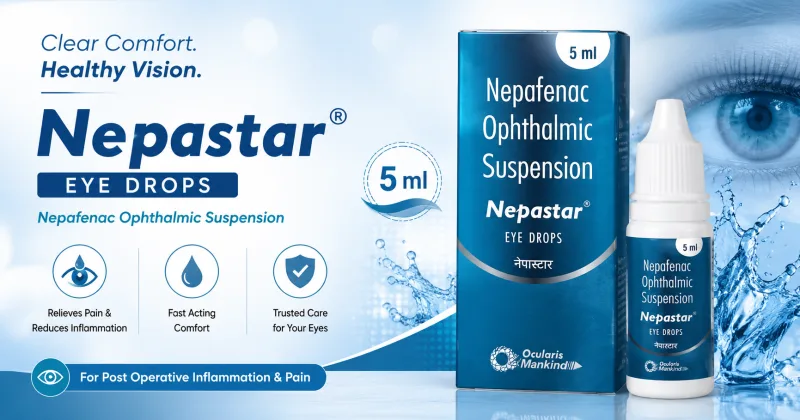
Eye surgery is often followed by a period of healing during which some patients may experience discomfort, pain, redness, or inflammation. Doctors may prescribe specific eye drops to help manage these symptoms and support a more comfortable recovery. Nepastar Drop 5ML is one such prescription eye medicine containing Nepafenac 0.1% w/v.
Nepastar Drop 5ML belongs to a group of medicines known as non-steroidal anti-inflammatory drugs (NSAIDs) and is used mainly to help manage pain and inflammation associated with cataract surgery. It is intended for ophthalmic use and should be used only according to the instructions provided by an ophthalmologist or other qualified healthcare professional.
Because eye medicines require careful and hygienic application, it is important to follow your doctor's instructions closely. You can also learn more about general eye health and common eye conditions through the National Eye Institute's eye health information.
What Is Nepastar Drop 5ML?
Nepastar Drop 5ML is an ophthalmic medicine containing Nepafenac 0.1% w/v. It is prescribed to help relieve pain and reduce inflammation in the eye following cataract surgery.
Nepafenac is an NSAID that works by reducing the production of certain substances involved in pain and inflammation. By controlling the inflammatory response in the eye, the medicine may help make the recovery period more comfortable.
Nepastar Drop 5ML is a prescription medicine. The exact dosage, frequency, and duration of treatment should be decided by your doctor based on your eye condition and surgical recovery.
Uses of Nepastar Drop 5ML
Nepastar Drop 5ML is primarily used for managing pain and inflammation following cataract surgery. Your ophthalmologist may prescribe it as part of the post-operative treatment plan.
Depending on the individual patient's condition, Nepafenac eye drops may be used to:
- Help relieve pain after cataract surgery
- Reduce inflammation in the eye following surgery
- Help control post-operative eye discomfort
- Support a more comfortable recovery after an ophthalmic procedure
The medicine should only be used for the condition for which it has been prescribed. It should not be used for routine eye irritation, dry eyes, or other eye problems without consulting an eye specialist.
How Does Nepastar Drop 5ML Work?
Nepastar Drop 5ML contains Nepafenac, an NSAID that helps reduce inflammation by interfering with the production of prostaglandins. These naturally occurring substances are involved in processes that contribute to pain and inflammation.
When the drops are applied to the eye, Nepafenac is converted into its active form and helps reduce the production of inflammatory chemicals. This action can help decrease pain and inflammation associated with the healing process after cataract surgery.
Potential Benefits of Nepastar Drop 5ML
The main benefit of Nepastar Drop 5ML is its role in managing pain and inflammation after cataract surgery. By helping control the inflammatory response, it may make the post-operative recovery period more comfortable for suitable patients.
The medicine is applied directly to the eye, allowing the active ingredient to act locally where it is needed. However, the response to treatment can vary from person to person, and the medicine should always be used according to the ophthalmologist's instructions.
Good eye care after surgery is also important. Avoid rubbing the eyes and follow all post-operative instructions given by your eye surgeon. The American Academy of Ophthalmology's eye health resources provide additional information about protecting and caring for your eyes.
How to Use Nepastar Drop 5ML
Use Nepastar Drop 5ML exactly as directed by your ophthalmologist. Wash your hands thoroughly before applying the eye drops.
To apply the drops, gently tilt your head backward and pull down the lower eyelid to create a small pocket. Place the prescribed number of drops into the affected eye without allowing the tip of the bottle to touch the eye, eyelashes, or eyelid.
Close your eye gently after applying the drops. Avoid squeezing or rubbing the eye immediately after application. Replace the cap tightly after use.
If you are using more than one type of eye drop, ask your doctor how much time you should leave between each medicine. Waiting several minutes between different eye drops can help prevent one medicine from washing out the other.
How Often Should Nepastar Drop Be Used?
The frequency of Nepastar Drop 5ML depends on your doctor's prescription and the reason for treatment. Do not change the number of drops or frequency of use on your own.
Some patients may be instructed to use the medicine several times a day for a specific period following cataract surgery. Your ophthalmologist will determine the appropriate treatment schedule according to your recovery.
Do not continue using the medicine for longer than recommended unless your doctor specifically advises you to do so.
Common Side Effects of Nepastar Drop 5ML
Like other medicines, Nepastar Drop 5ML may cause side effects in some people. Many side effects may be mild and temporary, but any unusual or persistent symptoms should be discussed with your doctor.
Possible side effects may include:
- Temporary blurred vision
- Eye irritation
- Eye discomfort
- Itching of the eyes
- Foreign body sensation
- Temporary changes in vision
If symptoms become severe, continue for a long time, or get worse, contact your ophthalmologist for advice.
Important Precautions Before Using Nepastar Drop 5ML
Before using Nepastar Drop 5ML, tell your doctor if you have any allergies to Nepafenac, other NSAIDs, aspirin, or any ingredients in the product.
Inform your ophthalmologist if you have a history of dry eye, bleeding problems, diabetes, corneal problems, or previous eye surgeries. Your doctor may need to monitor you more closely depending on your medical history.
Tell your healthcare provider about all other eye drops and medicines you are currently using. This includes prescription medicines, over-the-counter products, vitamins, and supplements.
Contact Lenses and Nepastar Drop
If you wear contact lenses, follow your doctor's instructions regarding their use during treatment. In many cases, contact lenses may need to be removed before applying ophthalmic medicines.
Ask your eye specialist when it is safe to resume wearing contact lenses after surgery or during treatment. Do not put contact lenses back in immediately after applying the drops unless your doctor has advised you that it is appropriate.
Nepastar Drop 5ML After Cataract Surgery
After cataract surgery, the eye needs time to heal. During this period, your doctor may prescribe several medicines, including anti-inflammatory or antibiotic eye drops, depending on your individual needs.
Nepastar Drop 5ML may be included in the post-operative treatment plan to help manage pain and inflammation. It is important to use every prescribed medicine according to the schedule given by your ophthalmologist.
Do not stop or change your eye drops without speaking to your doctor, even if your eye begins to feel better.
What to Do If You Miss a Dose?
If you forget to use Nepastar Drop 5ML at the scheduled time, apply it when you remember unless it is almost time for your next dose. If the next dose is due soon, skip the missed dose and continue with your regular schedule.
Do not use extra drops to compensate for a missed dose. If you frequently forget your medicine, discuss this with your doctor or pharmacist.
When Should You Contact Your Doctor?
Contact your ophthalmologist if your eye pain or inflammation becomes worse instead of improving. You should also seek medical advice if you notice significant changes in vision, severe redness, persistent irritation, or other unusual symptoms.
Seek immediate medical attention if you experience symptoms of a serious allergic reaction, such as swelling of the face or throat, difficulty breathing, or severe skin reactions.
After eye surgery, sudden or significant changes in vision should always be taken seriously and assessed promptly by an eye care professional.
Storage Information
Store Nepastar Drop 5ML according to the instructions provided on the product packaging. Available product information recommends storing the medicine below 30°C unless the manufacturer provides different instructions.
Keep the bottle tightly closed when not in use and keep it away from children. Do not use the drops after the expiry date.
To prevent contamination, never allow the dropper tip to touch the eye, eyelids, eyelashes, fingers, or any other surface.
Frequently Asked Questions About Nepastar Drop 5ML
What is Nepastar Drop 5ML used for?
Nepastar Drop 5ML contains Nepafenac 0.1% w/v and is prescribed to help manage pain and inflammation following cataract surgery.
Is Nepastar Drop an antibiotic?
No. Nepastar contains Nepafenac, which is an NSAID used to help reduce pain and inflammation. It is not an antibiotic.
Can Nepastar Drop be used for dry eyes?
Nepastar Drop is not primarily intended to treat dry eye disease. If you have dry, irritated, or uncomfortable eyes, speak with an ophthalmologist for an appropriate treatment recommendation.
Can I use Nepastar Drop without a doctor's prescription?
Nepastar Drop 5ML should be used under the guidance of an eye specialist. Do not start or continue treatment without professional advice.
Can I wear contact lenses while using Nepastar Drop?
Contact lens use may need to be avoided during treatment or around the time of eye surgery. Follow your ophthalmologist's instructions regarding when to remove and resume wearing contact lenses.
What should I do if my vision becomes blurred after using Nepastar Drop?
Temporary blurred vision may occur in some patients. If blurred vision persists, becomes severe, or is accompanied by significant eye pain or other concerning symptoms, contact your ophthalmologist promptly.
Can I use other eye drops along with Nepastar Drop?
You may be prescribed more than one eye medicine after cataract surgery. Tell your doctor about all eye drops you are using and follow the recommended interval between different medicines.
Disclaimer
This article is intended for general educational and informational purposes only. It should not be considered a substitute for professional medical advice, diagnosis, or treatment. Nepastar Drop 5ML is a prescription ophthalmic medicine and should be used only under the guidance of a qualified eye care professional. Product information, dosage instructions, and treatment recommendations may vary. Always follow your ophthalmologist's advice and check the latest product packaging before use.
For additional information about eye health and vision care, visit the National Eye Institute.